01
8 universities in the global top 100
Eight Australian universities rank in the world's top 100 (QS Rankings 2026), with the University of Melbourne and UNSW Sydney leading the Group of Eight.

Australia hosts over 100,000 Indian students across its world-class universities, offering Group of Eight institutions, generous scholarships, and one of the most attractive post-study work visas globally. iSTEP guides students through admissions to top Australian universities with proven results.
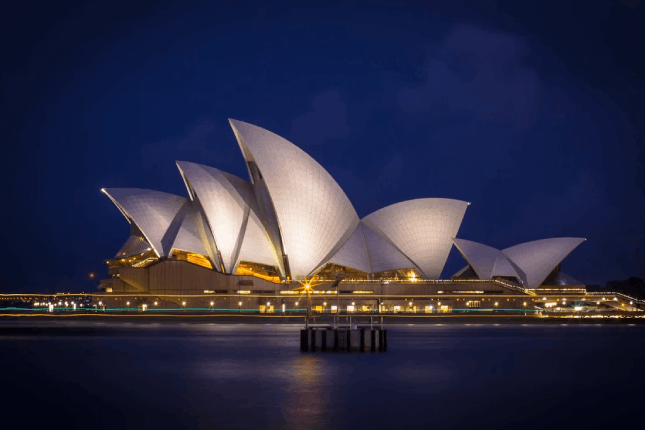 Australia · QS Top 100
iSTEP's Australia education consultants work one-on-one with academically strong students — from shortlisting Group of Eight universities and securing merit scholarships to GTE statements, Subclass 500 visas, and pre-departure. Counselling is free and based at our Nehru Place office in Delhi.
Click here for a free consultation →Australia ranks among the top destinations for Indian students pursuing global higher education. Here are the key reasons students choose Australia in 2026.
Eight Australian universities rank in the world's top 100 (QS Rankings 2026), with the University of Melbourne and UNSW Sydney leading the Group of Eight.
A post-study work visa of 2–6 years through the Temporary Graduate Visa (subclass 485), allowing graduates to live and work in Australia after completing their degree.
Indian students can claim 50% scholarships at select Group of Eight universities based on academic merit, making Australia financially competitive with the US and UK.
Strong job market in technology, healthcare, engineering, and accounting — sectors actively recruiting international graduates and offering pathways to permanent residency.
Multicultural campuses with established Indian student communities in Melbourne, Sydney, Brisbane, and Perth — easier transition for first-time international students.
Safe environment with high quality of life: Australian cities consistently rank in the Global Liveability Index top 10.
iSTEP partners with leading institutions in Australia ranked among the world's finest by QS Rankings 2026. Each university below offers competitive scholarships and clear pathways for high-achieving Indian students.
Ranked #13 globally (QS 2026). A Group of Eight institution with Nobel laureate alumni. Strong in research, medicine, law, and business. CRICOS Code: 00116K.
Ranked #19 globally (QS 2026). A Group of Eight powerhouse known for engineering, business, computer science, and architecture. CRICOS Code: 00098G.
Australia's oldest university, ranked #18 globally (QS 2026). Strong programs in medicine, law, arts, and architecture. World-class research output.
Ranked #37 globally (QS 2026). Largest Australian university by enrolment. Known for pharmacy, medicine, business, and IT. Multiple campuses in Melbourne.
Ranked #30 globally (QS 2026). Canberra-based research-intensive university with strengths in political science, public policy, science, and international relations.
Brisbane-based Group of Eight university ranked #40 globally. Excellent for environmental science, agriculture, biotechnology, and engineering.
Perth-based Group of Eight research university with strong programs in mining, geology, marine science, medicine, and business.
Founding member of the Group of Eight with established strengths in wine science, agriculture, engineering, and health sciences.
Indian students most commonly pursue these programs at Australia universities, based on graduate employment outcomes and post-study work eligibility.
The total cost of studying in Australia for Indian students includes tuition, living expenses, and visa-related fees. Below is an indicative breakdown for international students starting in 2026.
Approx. ₹15.5L – ₹33L. Varies by university and program. Group of Eight universities at the higher end.
Approx. ₹15.5L – ₹36L. MBAs and medicine cost more; arts and humanities at the lower end.
Approx. ₹16.3L. The Department of Home Affairs sets this as the mandatory financial proof for visa applications.
Overseas Student Health Cover is mandatory for the entire duration of your visa.
Subclass 500 visa fee, paid online to the Australian government.
Delhi to major Australian cities. Book 2–3 months in advance for best fares.
Costs are indicative and vary by university, program, and city. iSTEP counsellors provide university-specific cost estimates during your consultation.
Australia universities offer multiple admission cycles each year. Knowing your target intake helps you start application preparation 8-12 months in advance.
Major intake — most courses available. Applications close September–November of the previous year.
Second intake — most popular courses available. Applications close March–May of the same year.
Limited availability at select universities (Bond, UQ, Griffith). For students who missed earlier deadlines.
The Australia student visa requires careful documentation and timing. iSTEP guides students through each step below, achieving high approval rates through thorough preparation.
Write a Genuine Temporary Entrant statement explaining your study choice, ties to India, and post-study plans. Gather academic transcripts, IELTS/PTE results, financial proof, and statement of purpose.
After accepting your university offer and paying the initial deposit, your university issues an electronic Confirmation of Enrolment (eCoE) — the foundational document for your student visa application.
Purchase Overseas Student Health Cover for your entire visa duration. Complete medicals at a Bupa-approved panel clinic in India.
Submit your visa application through the ImmiAccount portal. Upload all documents, pay the AUD 1,600 fee, and provide biometrics at a VFS centre.
Most student visas are processed in 4–8 weeks. After approval, begin accommodation booking, currency exchange, and travel preparation with iSTEP's pre-departure briefing.
Australia universities and the government offer scholarships specifically for international students from India. iSTEP's scholarship-focused counselling helps high-achievers secure significant funding.
Australia Awards Scholarship (Government of Australia) — full tuition + living + travel, for postgraduate study.
Destination Australia Scholarship — AUD 15,000 per year for regional Australian universities.
University of Melbourne Graduate Research Scholarship — full tuition + stipend, for PhD candidates.
UNSW Future of Change Scholarship — up to 50% tuition fee waiver for high-achieving Indian students.
Monash International Merit Scholarship — AUD 50,000 over duration of program, awarded by academic merit.
University of Sydney India Scholarship — up to AUD 40,000 for Indian undergraduates and postgraduates.
ANU Chancellor's International Scholarship — up to AUD 25,000 per year for outstanding international applicants.
University of Queensland International Excellence Scholarships — AUD 5,000 to AUD 25,000 based on merit.
Australia offers one of the most generous post-study work visas globally. After completing a bachelor's or master's degree, international students qualify for the Temporary Graduate Visa (Subclass 485), which provides 2 to 6 years of full work rights depending on qualification and location. Graduates from regional Australian universities receive an additional 1–2 years on top. Many graduates use this period to gain skilled work experience and transition to permanent residency through the General Skilled Migration program. Indian graduates work across IT, accounting, engineering, healthcare, and education — sectors actively listed on Australia's skilled occupation lists. iSTEP's counsellors help students plan course selection with long-term PR pathways in mind.
Direct partnerships with more than 20 universities across Australia — including the top two, the University of Melbourne and UNSW Sydney — give iSTEP students priority application support.
We identify the strongest scholarship matches based on your profile, not generic applications.
Genuine Temporary Entrant statements are the #1 reason for visa rejection. Our advisors craft compelling statements specific to each student.
We begin working with students from Class 10–11 through to pre-final and final-year undergraduates, building profiles that qualify for premium Group of Eight admissions.
India-based counsellors with Australia education backgrounds — direct experience with the system, not just textbook knowledge.
Quick answers to the most common questions from Indian students and parents considering Australia.
iSTEP is among Delhi's leading Australia education consultants, with direct partnerships with Group of Eight universities including the University of Melbourne and UNSW Sydney. Unlike high-volume agencies, iSTEP's High Achievers' Program focuses on academically strong students seeking scholarships and admission to top-ranked Australian universities. Our Nehru Place office offers free 1-on-1 counselling. Book a consultation to discuss your eligibility.
Annual costs range from approximately AUD 60,000 to AUD 95,000 (about ₹33L to ₹52L) including tuition (AUD 28,000–65,000), mandatory living expenses (AUD 29,710), health insurance (AUD 600–800), and visa fees (AUD 1,600). Group of Eight universities sit at the higher end, while regional universities and TAFE institutions cost less. Tuition for medicine and MBA programs can exceed this range.
The Group of Eight (Go8) universities — University of Melbourne, UNSW Sydney, University of Sydney, Monash University, ANU, University of Queensland, University of Western Australia, and Adelaide University — are research-intensive and globally ranked in the top 100. For Indian students seeking strong career outcomes, Melbourne, UNSW, Monash, and UQ are particularly popular for engineering, IT, business, and health sciences.
Full scholarships are rare but exist. The Australia Awards Scholarship (Government of Australia) is the most prestigious 100% scholarship covering tuition, living, and travel — primarily for postgraduate study. Several universities offer 50% to 75% tuition scholarships including the University of Melbourne Graduate Research Scholarship and UNSW Future of Change Scholarship. iSTEP helps students target the strongest scholarship matches based on profile, course, and university.
The overall Subclass 500 student visa approval rate from India is approximately 85–90% for genuine applicants with strong documentation. The most common rejection reasons are weak GTE (Genuine Temporary Entrant) statements, insufficient financial proof, and inconsistencies in documentation. Properly prepared applications through experienced consultants have significantly higher approval rates.
The Temporary Graduate Visa (Subclass 485) gives international graduates 2 to 6 years of work rights depending on qualification level: 2 years for a Bachelor’s degree, 3 years for a Master’s (coursework), 4 years for a Master’s (research), and 6 years for a PhD. Students who study at regional Australian universities get an additional 1–2 years on top. This makes Australia one of the most attractive post-study work destinations globally.
Most Australian universities require IELTS 6.5 overall with no band below 6.0 for undergraduate admission. Postgraduate programs typically require IELTS 6.5–7.0. PTE Academic (58–65), TOEFL iBT (79–94), and Cambridge English are also accepted. Some Group of Eight universities and specific programs (like nursing, teaching, medicine) require higher scores. iSTEP provides IELTS preparation guidance as part of consultancy.
Yes. Dependents (spouse and children under 18) can be included on your Subclass 500 student visa application or apply separately. Dependent spouses can work full-time once you commence your master’s or PhD program, and 40 hours per fortnight during your bachelor’s program. School-aged children must enrol in Australian schools, with fees depending on the state.
Start at least 10–12 months before your intended intake. For February 2027 intake, begin in February–April 2026. Early starters get priority for scholarships, accommodation, and visa processing. iSTEP recommends beginning university shortlisting and IELTS preparation 12–15 months in advance for the strongest applications and best scholarship outcomes.
Yes — Australia offers clearer pathways to permanent residency than most study destinations. After completing your degree and gaining work experience on the Subclass 485 visa, you can apply for PR through the General Skilled Migration program if your occupation is on the Skilled Occupation List. Common pathways for Indian graduates include IT, engineering, nursing, accounting, and education. iSTEP’s counsellors help students choose courses aligned with PR-eligible occupations.
For academically strong students, yes. Australia combines Group of Eight universities ranked in the world’s top 100, one of the most generous post-study work visas globally (2–6 years on the Subclass 485), and a clear General Skilled Migration pathway to PR. Strong demand in IT, engineering, healthcare, and accounting means graduates earn solid returns on the AUD 28,000–65,000 annual tuition, and merit scholarships can cut that materially. It is worth it for students who plan early and target scholarships and PR-aligned courses — which is exactly what iSTEP optimises for.
In many cases, yes. Several Australian universities waive IELTS for Indian students whose prior education was in English medium, or accept alternatives such as PTE Academic, TOEFL iBT, the Duolingo English Test, or a Medium of Instruction (MOI) letter from your school or college. Requirements vary by university and program — Group of Eight universities are usually stricter. iSTEP checks each university’s English-waiver policy against your profile so you apply where you qualify.
After Class 12, you can apply directly to undergraduate degrees at Australian universities (or to a foundation/diploma pathway if you need a bridge). After Class 10, you cannot enter university yet, but iSTEP’s early-intervention approach begins here — building your academic profile, subject choices, and English scores so that by Class 12 you qualify for premium Group of Eight admissions and scholarships. Starting in Class 10–11 is the single biggest advantage for high-achiever outcomes.
International students in Australia can work up to 48 hours per fortnight during semester and unlimited hours during scheduled breaks. Casual roles in hospitality, retail, and administration typically pay around AUD 24–30 per hour (the national minimum wage plus casual loading), which can cover a meaningful share of living costs. Part-time work is meant to support living expenses, not fund full tuition — students should still show financial capacity for their visa.
For the Subclass 500 visa you must show genuine access to funds covering 12 months of living costs — currently AUD 29,710 for the student — plus your first-year tuition and travel. Funds can come from savings, an education loan, or a sponsor, and must be supported by clear, consistent documentation. Weak or inconsistent financial proof is one of the top reasons for visa refusal, so iSTEP reviews your financial file in detail before submission.
Book a free 1-on-1 counselling session with an iSTEP expert. We'll review your profile, recommend universities, and create a personalised application strategy — at no cost.